Please Note- this website is best viewed on a desktop/laptop as it is not mobile-friendly. Web-page in development.
Visit to Egypt March 2024
(web page in development)
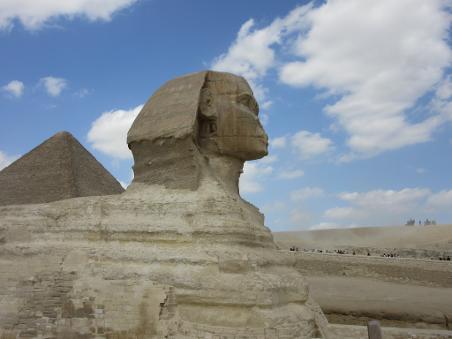
Great Sphinx of Giza, near Cairo
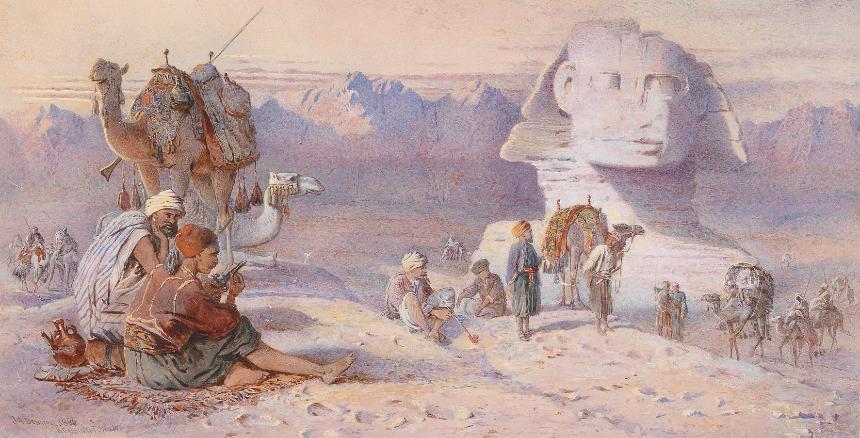
'The Great Sphinx of Giza' 1886 (or, 'Resting caravan in front of the Sphinx of Giza'; or, 'Halt by the Sphynx, Egypt')


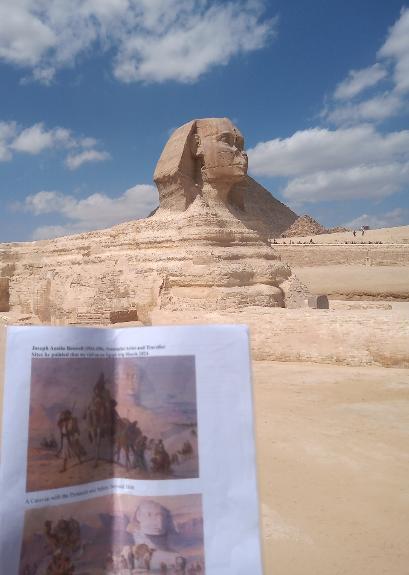
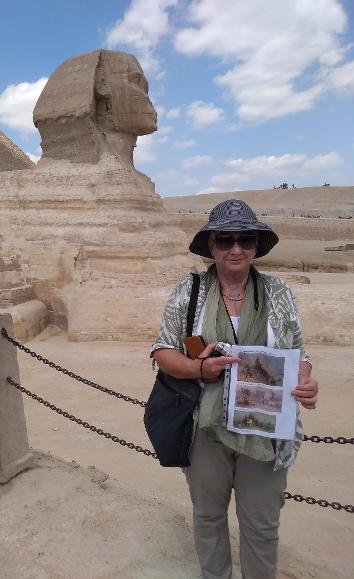
As well as following in my 3rd great-granduncle's footsteps, I was also in a sense following in the footsteps of his brother-in-law, James Judd, who also went to Egypt, but much later, in 1886. He went on an early "package tour" with John Mason Cook, the son of Thomas Cook, travel entrepreneur and the founder of the travel agency 'Thomas Cook & Son.' James Judd wrote a book based on his experiences 'Diary Dottings in Palestine and Egypt' (Diary Dottings in Palestine and Egypt) which was published in 1887 by Doctors' Commons, London.
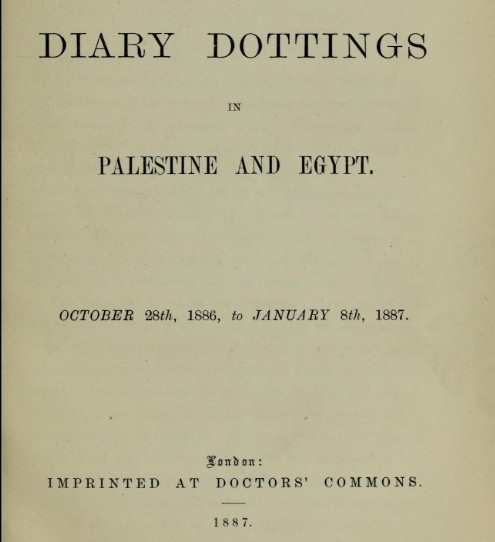
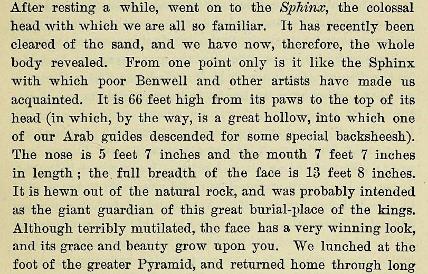
The book is dedicated to J M Cook Esquire, the son of Thomas Cook. John Mason Cook took over the company in 1878, and had offices and many staff in Egypt. He accompanied Judd on this trip October 1886-January 1887. "To the world you are known as the King of Tourists, as one who has so perfected the facilities for travel, that the science, enterprise and labour required in their accomplishment are forgotten in the enjoyment of the perfection attained. By and by you will be recognised as the great benefactor of your generation.....besides all this, you are a warm personal friend....". Note that on page 73, the Sphinx is referred to as only recently having been cleared of sand.
James Judd refers to his brother-in-law Joseph Austin Benwell on page 32 (referring to a painting by Benwell called "Star in the East", refer to the Orientalist Paintings webpage), and also on page 73 where he refers to "poor Benwell" in his description of the Sphinx, reproduced above. I wonder why James Judd referred to him in this way. Possibly it was because Benwell died in May 1886, not long before Judd set off on his travels. James Judd was married to Sarah, the sister of Benwell's wife Marian.

'A Caravan with the Pyramids and Sphinx beyond' 1868
Colossi of Memnon, Luxor West Bank (ancient city of Thebes)
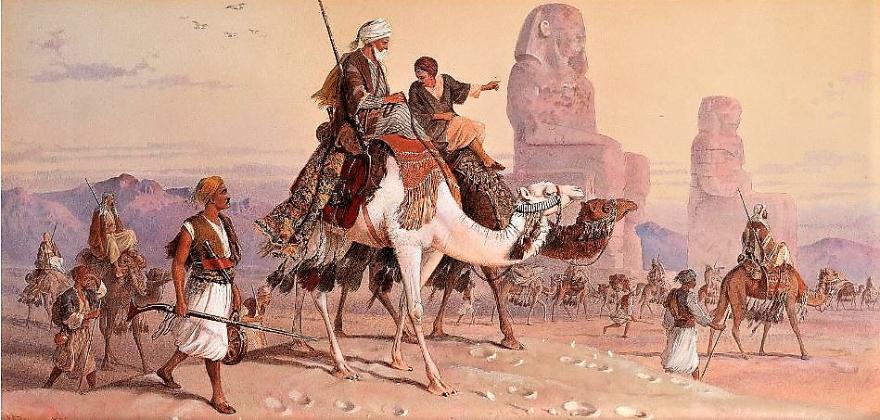
'A Caravan passing the Colossi at Memnon, Thebes' 1876
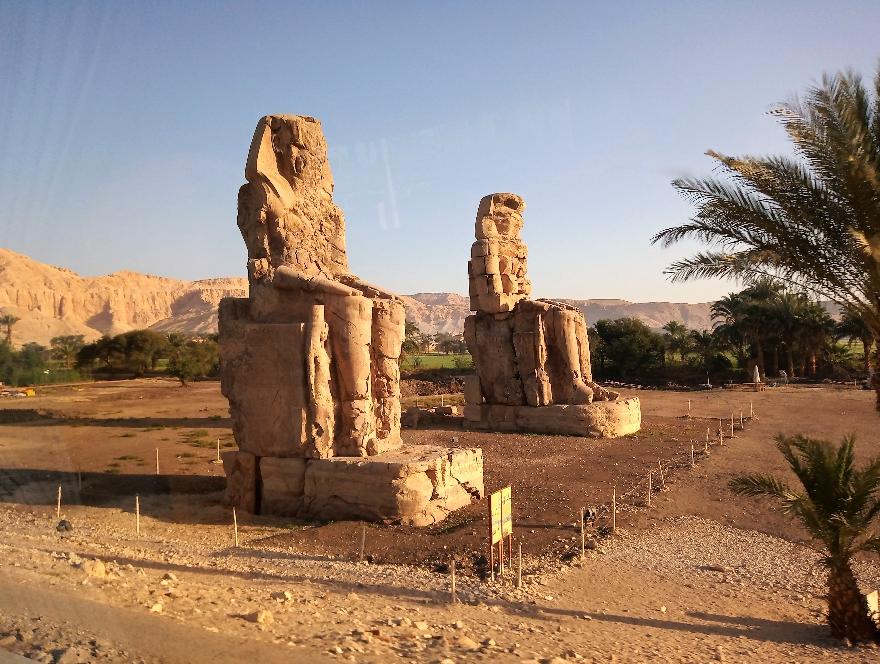
The statues are clearly recognisable in Benwell's paintings. I was fortunate to get some photos from more or less the same angle. The statues were already eroded in the 1860s when Benwell visited them, and have been subject to more erosion since his time. Still, it is worth remembering they are around 3,400 years old.
7 December 1886
"We crossed the Nile, which is very wide here, in boats to the opposite side to visit Thebes, where are the grandest and most extensive of the wonders of ancient Egypt: the Tombs of the Kings-excavations exceeding 24,000 feet in extent; the Colossi, 60 feet high, the only two remaining out of eighteen, which originally led up to the Temple of Amonuph; the Memnonium or Ramesium; the Palace of Koorneh; the Temple of Amonuph III., and the vast Temple palace of Meeden-et-Haboo. For this we take two days, very tiring, but, needless to say, delightful and interesting."
12 March 2024
"Early wake-up call and breakfast for a 6.30am coach to the Valley of the Kings, crossed the Nile to the West bank. Took mini-vehicles to the site up the valley- lots of tombs! Visited three tombs (Rameses) deep underground, amazing hieroglyphics and long corridors. Coach to Temple of Hatshepsut [note, the temple was officially excavated between 1893 and 1906, before Judd's visit in 1886]. Then to the Valley of the Queens [discovered 1904]. Another stop at the Colossi of Memnon, and took photos of where Benwell painted them......."
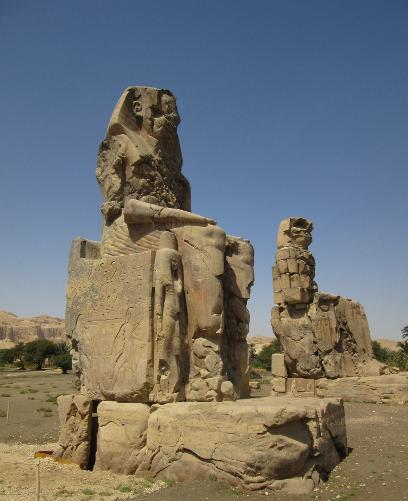
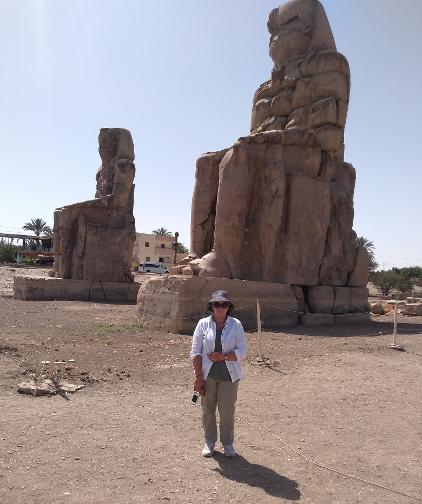
The Colossi of Memnon, 12 March 2024.
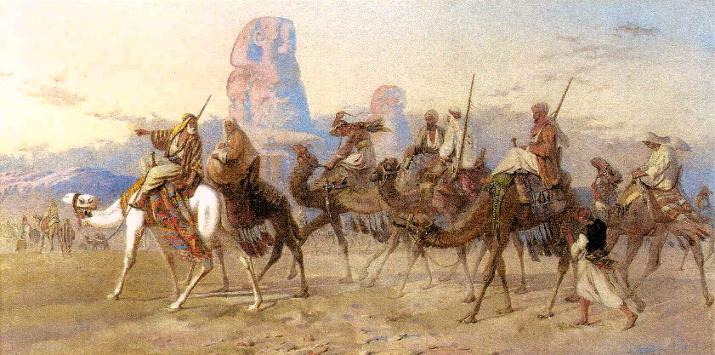
'A Caravan passing the Statues of Memnon, Plain of Thebes' 1869
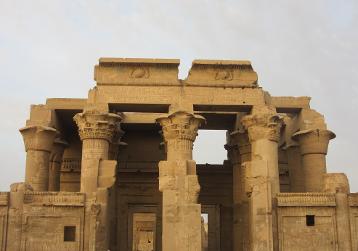
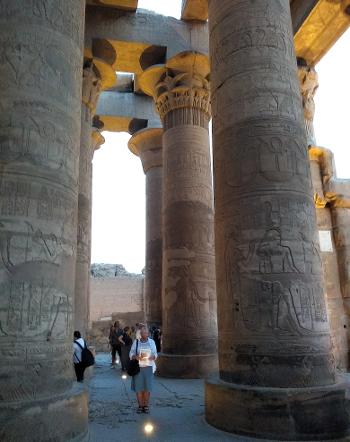
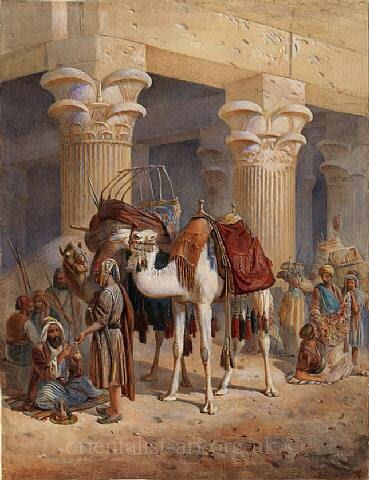
Kom Ombo

'Kom Ombo, Upper Egypt' 1876


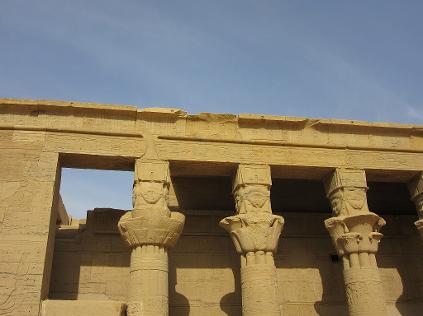
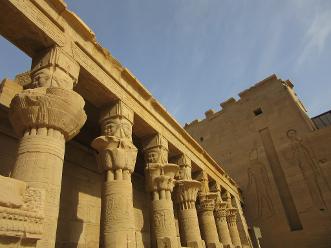
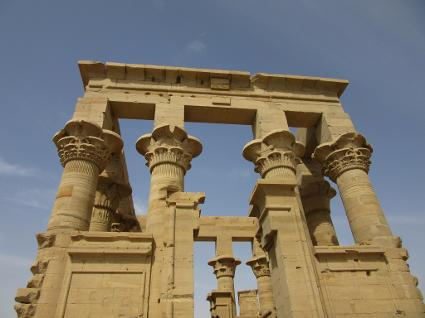
Philae
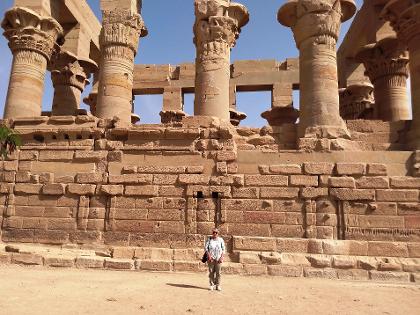
The photos below were taken on 14 March 2024. Note the design and shapes of the capitals at the top of the columns. The carved capitals/heads at the very tops of some of the columns are depicted clearly in the 'Carpet Dealers at Philae' painting.
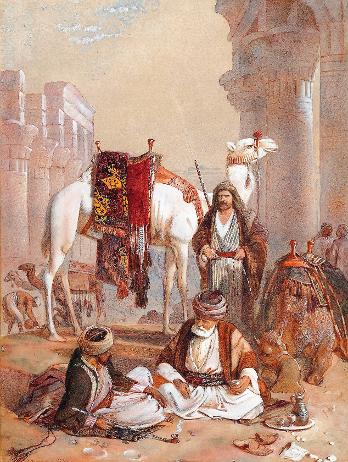
'The Temple of Isis, Philae' 1877
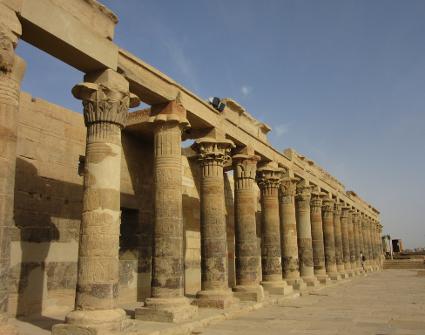
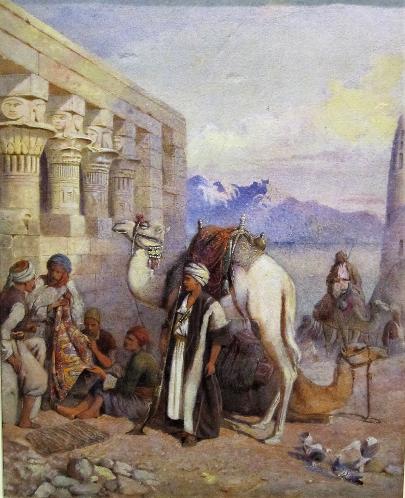
'Carpet Dealers at Philae' 1885
Luxor
Extract from 'Diary Dottings in Palestine and Egypt' 1887 by James Judd (Benwell's brother-in-law, see above):
6 December 1886
"Reached Luxor early in the evening. Here is a first-class hotel in an extensive garden facing the Nile. It belonged until quite recently to Mr. Cook, and has all the comforts of Cairo and Alexandria. We are moored close to the Temple of Luxor, whose massive columns stand out on the moonlit sky, grand and awe-inspiring. Mahommed made our arrival at Luxor a notable event. He lives there, and this was his first visit after his pilgrimage to Mecca, which gives him the title of Hadji and Effendi, entitling him to wear the green turban, and to become ever after a man of importance among his people. In addition, this was the first coming of the first of the new line of steamers, and the result was a very interesting reception, and a sight rarely to be seen. Our vessel was dressed from stem to stern with flags of all nations; at the prow were two splendidly decorated green flags bearing the Prophet's monogram, and with texts from the Koran, while two small cannon were run out on either side, and loaded for the feu de joie which was to announce our coming......."
Extract from my Five-Year Diary:
17 March 2024
"The ship docked at Luxor, we left on the coach at 7.30am to go to Karnak Temple - a huge complex about 25 minutes away. Bought a basalt scarab and two Egyptian cats for the grandsons from a local vendor. Then we went to a Papyrus gallery to watch papyrus paper being made, and bought a small artwork with a cartouche and hieroglyphics for our daughter. Then on to Luxor Temple and found the spot where Benwell painted "Travellers at Luxor" (1877), took lots of photos. Back to the ship and bought two small jewelled camels for the granddaughters from the ship shop. Up on the top deck for a cuppa, then sat at the prow. There was a packed 'departure' meeting at 7pm ready for disembarkation tomorrow. After dinner we spent an enjoyable evening on the top deck"
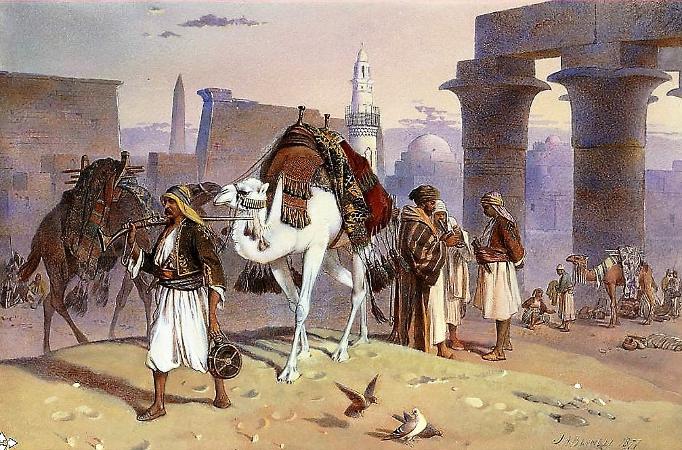
'Travellers at Luxor' 1877
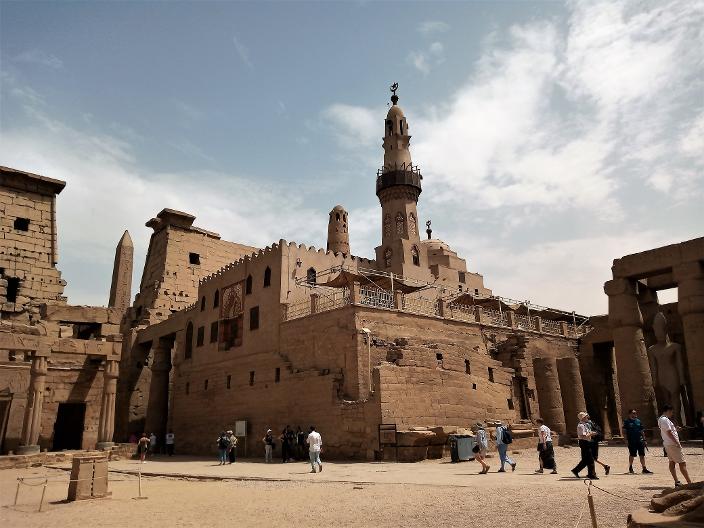
Luxor Temple, 17 March 2024, from a similar viewpoint. Note the obelisk just outside the walls on the left, the minaret, top of the domed roof of the mosque, and the end of the row of column pillars on the right.
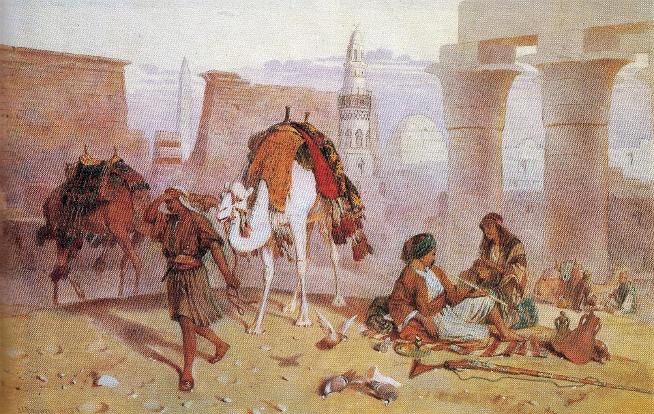
‘Resting among Egyptian ruins at evening’ 1875
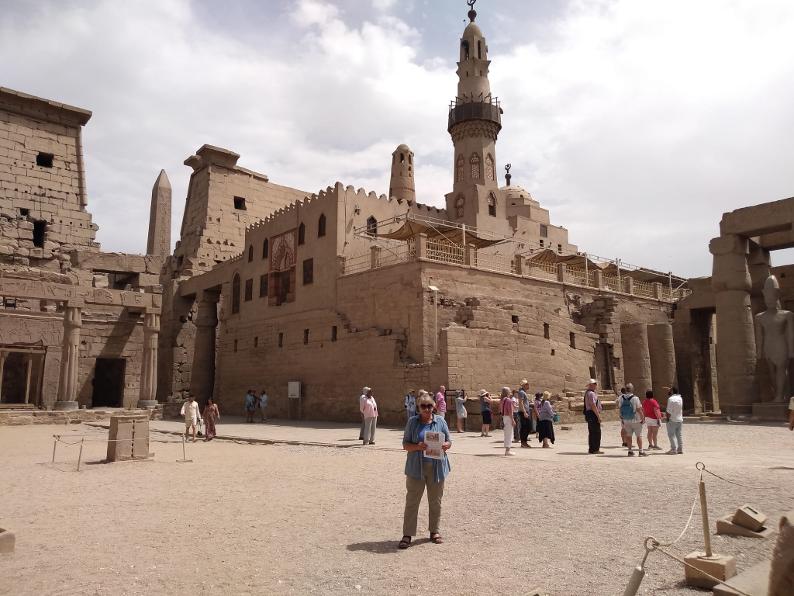
Luxor Temple, 17 March 2024, from a similar viewpoint. I am holding a photocopy of the painting!

'Arab Traders feeding pigeons near a Mosque' 1874

'Luxor on the Nile'

'A Camel train leaving Luxor, Egypt' 1874
You can just see the obelisk, minaret and mosque (Abu Haggag Mosque) and the end of the row of columns. The sand/ground level was a much higher level then than it is now. This is well-documented, also mounds of sand can be seen in the painting. This explains why only a small part of the top of the mosque roof is visible in the photos - Benwell would have had a higher viewpoint in the 1860s. Also, the 'capitals' of the columns have been eroded. I am standing in the approximate spot he made his drawings for the first four paintings from (looking from other direction in the last photo, below).
It has been fascinating following in Benwell's footsteps 160 years after he travelled in the region in the 1860s. And also those of his brother-in-law James Judd, who travelled to Egypt in 1886/87, also following in Benwell’s footsteps.
(more to follow).


Material researched and written by Dee Murray (Deirdre Murray). Website compiled by Dee Murray. All rights reserved.
All images on this website are either scanned or photographed from the author’s own resources, appear with permission of owners/copyright holders, or are in the public domain in digital format via websites such as HathiTrust, Openlibrary.org, the Internet Archive (archive.org) or Google Books.